


Step outside and the Hayasaki Strait opens before you. Amakusa in the distance. Nowhere to be. Nothing to do but stand there.
Wake to birdsong. Boil water. Sit on the veranda and watch the light change. As they leave, guests often stop and say: I had forgotten what a morning could feel like.
This is not a trip to collect experiences. It is a trip to put some down. In the quiet, things you had nearly forgotten about yourself have a way of surfacing — truths, longings, a simpler version of who you are. May your time at NAMI be that return.
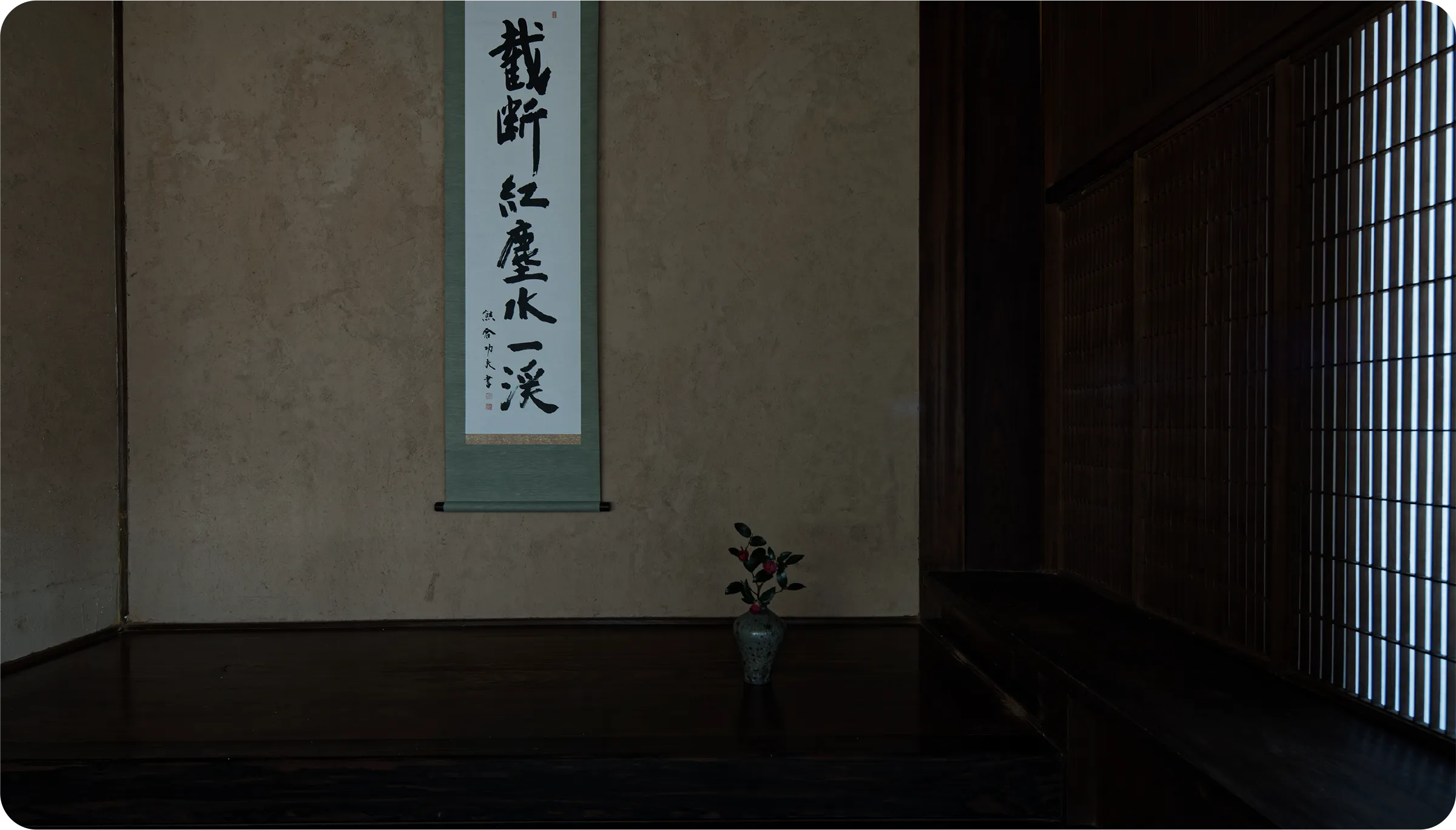
Only one group sleeps here each night. That is not a policy — it is a promise.
Built in the final years of the Meiji era by timber merchant Ueki Matazo, this kominka was raised with centuries-old wood — you can feel it in the weight of the pillars, the stillness of the beams. A hundred years later, guests step inside and exhale: "I'm so glad I came."
Your schedule, your title, the expectations of others — none of them live here. This space has a way of returning you to yourself, without your even trying.
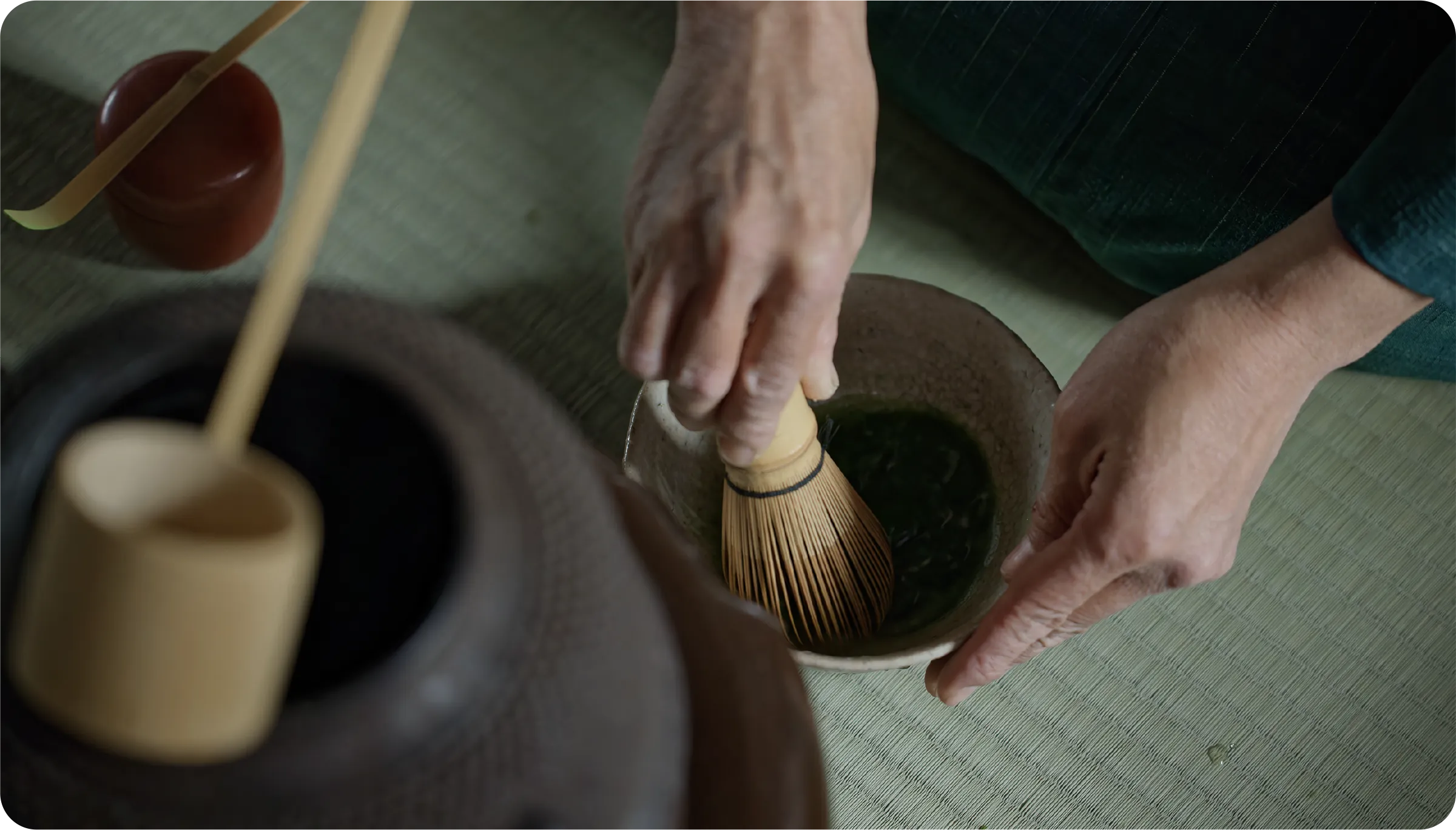
The moment you arrive, Nami prepares a bowl of matcha — just for you.
She prepares it in front of you, with the full presence of ichigo ichie — this moment, this person, unrepeatable. The scent of tea. The sound of water finding its heat. Whatever was running through your mind an hour ago quietly steps aside.
This single bowl is where NAMI begins.
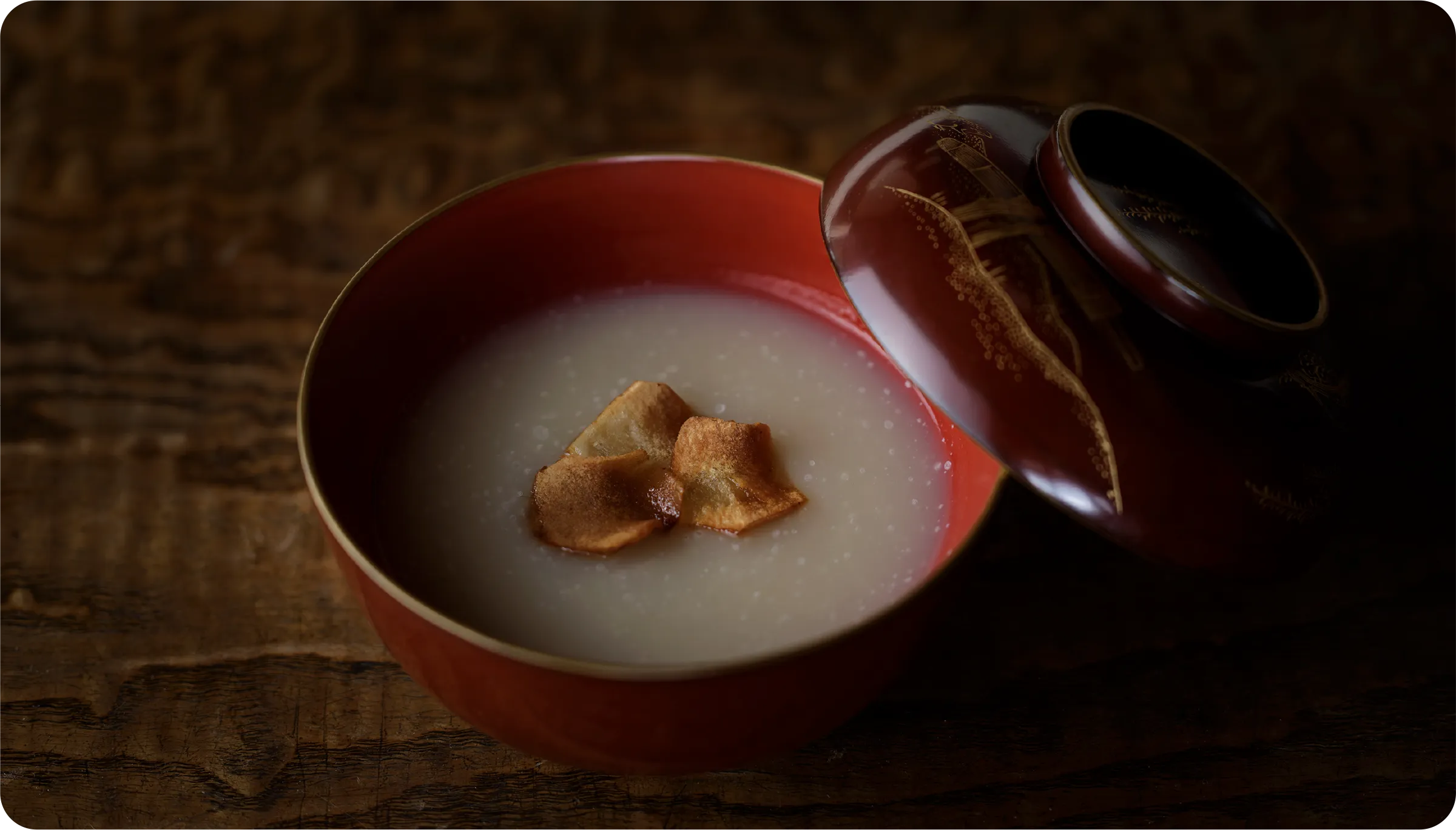
Food is how NAMI takes care of you.
NAMI's Zen Vegetable Cuisine belongs to no category. Not shojin ryori, not kaiseki — something closer to the land itself. Seasonal vegetables at their peak, house-made fermented seasonings, the quiet depth of the Kuchino-tsu sea. Each dish is composed with the care of someone who has spent a lifetime listening to what ingredients want to become.
By the next morning, something has shifted. The body feels lighter. The mind follows. That is the quiet work of this food.
"A truly good vegetable is beautiful."
Vegan and vegetarian menus are available on request. Please let us know your dietary needs at the time of booking.
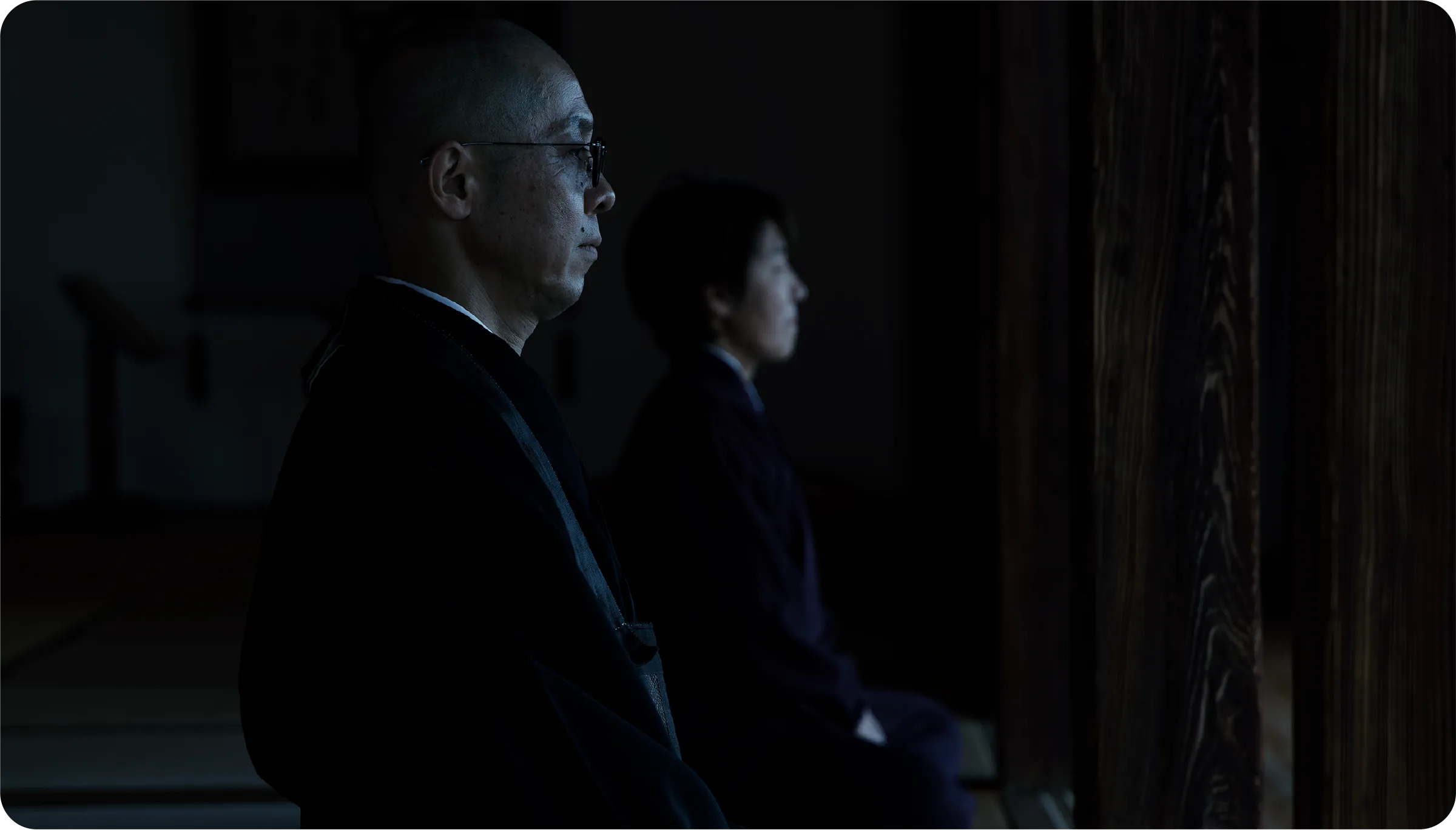
Just steps from the inn, Gyokuhouji has been holding the prayers of this land for centuries — and it shows in the quality of the silence there.
Those who wish may join an evening zazen session at the temple. You regulate the breath. You sit. That is all — and yet the mind grows quieter than you might believe possible.
Many guests tell us they couldn't empty their minds. That's not the point. Something loosens while you sit — slowly, without announcement. That alone is worth the stillness.
In the 16th century, Portuguese ships sailed into this harbor and Christianity took root on Japanese soil. In 1582, young Japanese envoys set out from this very shore toward Rome — one of the first times these two worlds truly met.
In 1637, a seventeen-year-old boy named Shiro gathered nearly 37,000 Christians and farmers for a last stand against a shogunate army ten times their size. They made their final refuge at Hara Castle, just along this coastline. None walked away. The ruins are now a UNESCO World Heritage Site.
To offer prayers for those who fell, the Zen temple Gyokuhouji was founded nearby — Buddhist sutras chanted for Christian souls. It still stands today, just steps from the inn, as quietly as it always has.
Buddhist and Christian, resting in the same earth. For centuries, Japan has held a rare capacity: to receive other faiths without erasing them — to let them settle in, take root, become part of the landscape. Kuchino-tsu may be where that capacity runs deepest.
NAMI stands on that ground. A Zen retreat — and a place that welcomes every form of prayer.
